

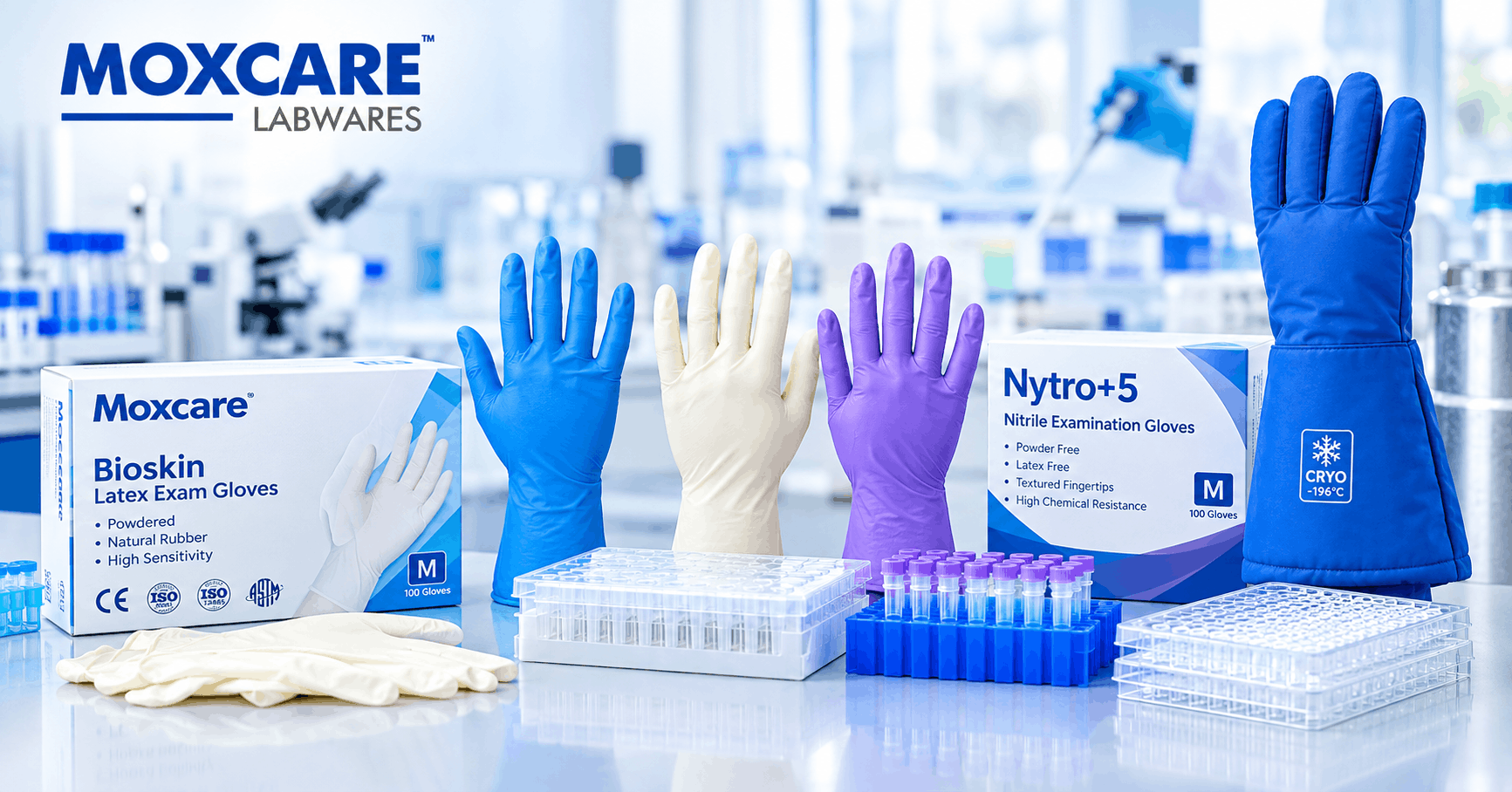
Gloves are the one PPE item every lab, hospital, and industrial facility reorders constantly — and the one most often bought on price alone, without matching the material, length, sterility, or temperature rating to the actual task. That mismatch shows up later as torn gloves mid-procedure, chemical breakthrough, latex allergy incidents, or cryo burns from the wrong hand protection near liquid nitrogen.
This guide is written for lab procurement managers, hospital and diagnostic administrators, EHS/safety officers, biotech and pharma companies, and PPE distributors sourcing hand protection at scale. It walks through how to choose between nitrile and latex exam gloves, when sterile variants are worth the added cost, and where specialty gloves — cryogenic and temperature-resistant — fit into a lab’s broader safety program.
Why Glove Selection Is a Procurement Decision, Not Just a Reorder
Three factors should drive any bulk glove purchase, in this order:
- Barrier and chemical protection – Does the glove resist the specific chemicals, biological hazards, or temperature extremes your team actually handles?
- Fit, dexterity, and sensitivity – Gloves that are too thick or poorly fitted get removed mid-task, which defeats the purpose of wearing them at all.
- Certification and traceability – For regulated diagnostic, pharma, or hospital environments, CE, ISO 9001, ISO 13485, and ASTM International compliance isn’t optional paperwork — it’s what your quality and compliance audits will ask for.
Getting these three right before placing a bulk order avoids the most common procurement mistake: standardizing on one glove type across a facility that actually needs two or three different ones for different tasks.
Nitrile vs. Latex Gloves: Choosing the Right Material
Nitrile gloves are synthetic, latex protein-free, and generally the safer default for facilities with any risk of latex allergy among staff or patients — a real and increasingly common consideration in hospital and diagnostic procurement. They also tend to offer stronger chemical resistance across a wider range of solvents and reagents, which is why most labs handling reagents beyond basic aqueous solutions default to nitrile.
Latex gloves, made from natural rubber, are prized for superior tactile sensitivity and elasticity — often the preferred choice for exam and procedural work where fine dexterity matters more than broad chemical resistance, and where latex allergy isn’t a concern for the specific staff or patient population.
Moxcare’s Bioskin Latex Exam Gloves are manufactured from natural rubber, are biodegradable, and are slightly powdered, offering better sensitivity and elasticity than nitrile for teams that prioritize touch and fit. They’re manufactured to Malaysian standards and meet CE, ISO 9001, ISO 13485, and ASTM International standards for medical exam use — a relevant checkbox for hospital and diagnostic procurement teams that need documented compliance on file.

Bioskin Latex Exam Gloves in laboratory use
| Cat. No. | Description | Packing |
|---|---|---|
| MCLG000S | Latex Gloves, Small | 100 Pcs/Box, 10 Box/Pack |
| MCLG000M | Latex Gloves, Medium | 100 Pcs/Box, 10 Box/Pack |
| MCLG000L | Latex Gloves, Large | 100 Pcs/Box, 10 Box/Pack |
Nitrile Glove Range: Nytro+5, Nytro+7, and Nytro+7X Compared
Moxcare’s Nytro+ nitrile line isn’t a single product — it’s three glove strengths built for different levels of protection, so procurement teams can standardize by task rather than defaulting everyone to the same glove.
Nytro+5 Cool Purple Nitrile Gloves — Sensitivity-First Nitrile
Nytro+5 gloves are Moxcare’s medical-grade nitrile option built for tasks demanding high sensitivity. They’re 100% synthetic super-soft nitrile, latex protein- and powder-free, with textured fingertips for grip in both wet and dry conditions, chemical resistance across a wide range of reagents, and roughly 3x the puncture resistance of natural rubber gloves. They’re certified to CE, ISO 9001, ISO 13485, and ASTM International standards.
| Cat. No. | Description | Packing |
|---|---|---|
| 607089 | Nytro+5 Nitrile Gloves, Small | 100 Pcs/Box, 10 Box/Pack |
| 607090 | Nytro+5 Nitrile Gloves, Medium | 100 Pcs/Box, 10 Box/Pack |
| 607091 | Nytro+5 Nitrile Gloves, Large | 100 Pcs/Box, 10 Box/Pack |
| Nytro+5S-S | Nytro+5 Sterile Nitrile Gloves, Small | 50 Pairs/Pack |
| Nytro+5M-S | Nytro+5 Sterile Nitrile Gloves, Medium | 50 Pairs/Pack |
| Nytro+5L-S | Nytro+5 Sterile Nitrile Gloves, Large | 50 Pairs/Pack |
Nytro+7 Purple Nitrile Gloves — Standard-Duty Protection with Sterile Options
Nytro+7 gloves are powder-free and latex protein-free, with tested tensile strength and chemical resistance, and grip performance validated in both wet and dry conditions. They’re available across a wider size range — XS, S, M, and L — with sterile variants for aseptic or cleanroom-adjacent work.
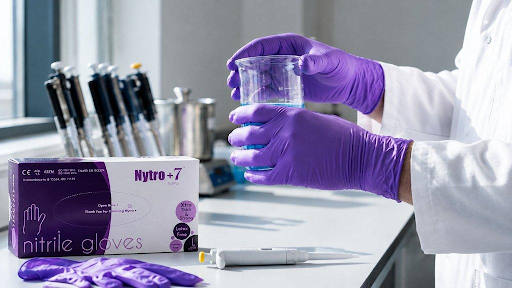
Nytro+7 Purple Nitrile Gloves in laboratory use
| Cat. No. | Description | Packing |
|---|---|---|
| 607197 | Nytro+7 Nitrile Gloves, Extra Small | 100 Pcs/Box, 10 Box/Pack |
| 607198 | Nytro+7 Nitrile Gloves, Small | 100 Pcs/Box, 10 Box/Pack |
| 607199 | Nytro+7 Nitrile Gloves, Medium | 100 Pcs/Box, 10 Box/Pack |
| 607200 | Nytro+7 Nitrile Gloves, Large | 100 Pcs/Box, 10 Box/Pack |
| NYTRO+7S-XS | Nytro+7 Sterile Nitrile Gloves, Extra Small | 50 Pairs/Pack |
| NYTRO+7S-S | Nytro+7 Sterile Nitrile Gloves, Small | 50 Pairs/Pack |
| NYTRO+7S-M | Nytro+7 Sterile Nitrile Gloves, Medium | 50 Pairs/Pack |
| NYTRO+7S-L | Nytro+7 Sterile Nitrile Gloves, Large | 50 Pairs/Pack |
Nytro+7X Purple Nitrile Gloves — Extra-Long, Extra-Duty Protection
Nytro+7X gloves share the same core specification as Nytro+7, with one deliberate difference: an extra-long 290mm length for extended wrist and forearm coverage. They’re also almost double the strength and thickness of Moxcare’s standard Nytro+ gloves, making them suited to more demanding laboratory, industrial, and general safety applications where standard-length gloves leave the wrist exposed.
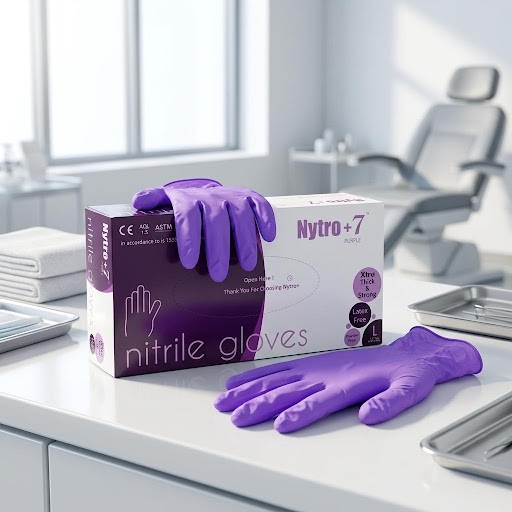
Nytro+7X Purple Nitrile Gloves — representative product packaging
| Cat. No. | Description | Size | Packing |
|---|---|---|---|
| 607092 | Nytro+7X Purple Nitrile Gloves, Small | Small | 100 Pcs/Box, 10 Box/Pack |
| 607093 | Nytro+7X Purple Nitrile Gloves, Medium | Medium | 100 Pcs/Box, 10 Box/Pack |
| 607094 | Nytro+7X Purple Nitrile Gloves, Large | Large | 100 Pcs/Box, 10 Box/Pack |
Choosing between the three: Nytro+5 for sensitivity-critical tasks needing maximum dexterity and puncture resistance; Nytro+7 for standard-duty lab and diagnostic work where a sterile option matters; Nytro+7X where extended wrist coverage and extra strength outweigh dexterity — sample handling, industrial safety, and general protection tasks that put more wear on the glove.
Sterile vs. Non-Sterile: When the Added Cost Is Worth It
Sterile nitrile gloves cost more per pair and are typically packed in smaller 50-pair units rather than bulk boxes — but they’re necessary anywhere aseptic technique matters: cleanroom work, sample handling ahead of sensitive molecular assays, or any workflow where non-sterile gloves risk introducing contamination into the result itself. Both Nytro+5 and Nytro+7 are available in sterile format; procurement teams supplying mixed-use facilities often stock both sterile and non-sterile boxes of the same glove line rather than standardizing on one, so routine tasks aren’t paying the sterile premium unnecessarily.
Specialty Protection: Cryogenic and Temperature-Resistant Gloves
Standard nitrile and latex gloves aren’t rated for temperature extremes — labs working with liquid nitrogen, dry ice, autoclaves, or hot glassware need dedicated protection.
EMROS Cryo Gloves use multi-layer insulation to protect hands and forearms from cryogenic hazards like liquid nitrogen exposure. They’re lightweight, flexible, durable, and comfortable enough for extended wear while still providing strong thermal protection. Note: these gloves are not designed for direct immersion in liquid nitrogen — they protect against splash, contact, and handling exposure, not submersion.
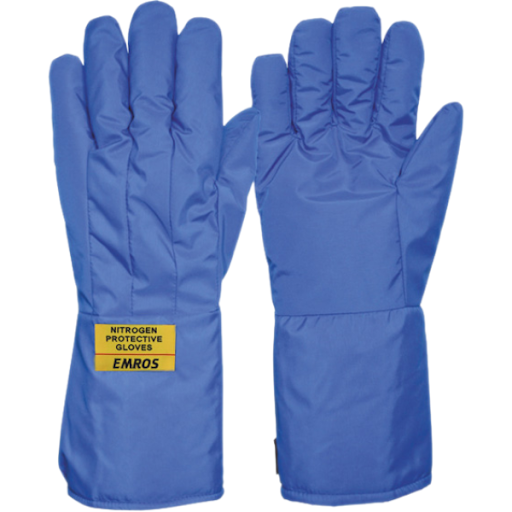
EMROS Cryo Gloves — Nitrogen Protective Gloves
| Cat. No. | Description | Packing |
|---|---|---|
| MCCG0038 | Cryo Gloves, Mid Arm, Medium | 1 |
| MCCG0038 | Cryo Gloves, Mid Arm, Large | 1 |
| MCCG0048 | Cryo Gloves, Elbow, Large | 1 |
RHINO Temperature Resistant Gloves cover the opposite and adjacent end of the temperature range — molded from special-grade silicone rubber rated from -57°C to +250°C, with a non-slip grip, free-size fit, and chemical resistance. They’re built for handling hot or cold labware like flasks and beakers directly, and are available in two formats depending on the task.
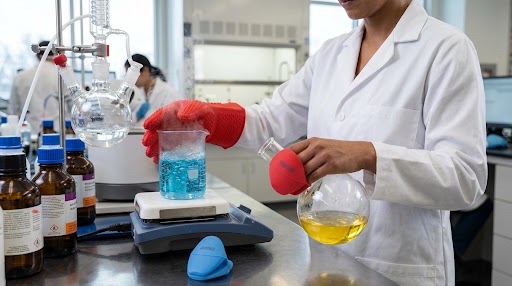
RHINO Temperature Resistant Glove handling a hot beaker
| Cat. No. | Description | Packing |
|---|---|---|
| MCSHP-Grip | Rhino Hand Grip | 4 Pcs/Pack |
| MCSHP-Glove | Rhino Hand Glove | 2 Pairs/Pack |
For labs running both cryogenic storage and high-heat processes like autoclaving or glassware handling, stocking both EMROS Cryo Gloves and RHINO gloves covers the full temperature range that standard nitrile or latex gloves simply aren’t rated for.
A B2B Buying Checklist for Lab and Hospital Gloves
- Match material to allergy risk — Default to nitrile wherever latex allergy is a documented concern among staff or patients.
- Match strength and length to task risk — Standard nitrile for routine work; extra-long, extra-thick options like Nytro+7X for demanding sample handling and industrial tasks.
- Decide sterile vs. non-sterile by workflow, not by default — Reserve sterile stock for aseptic or contamination-sensitive steps to control cost.
- Check certification on file — CE, ISO 9001, ISO 13485, and ASTM compliance should be documented and available for audit, not just claimed on packaging.
- Cover your full temperature range — Cryogenic and high-heat tasks need dedicated gloves; standard nitrile or latex is not a substitute.
- Plan size range across your team — Stocking XS through L (as available) reduces both waste and the temptation to wear an ill-fitting glove.
- Confirm bulk and distributor terms — Continuous facility-wide use calls for reliable box-and-pack-level supply agreements, not one-off cartons.
Why Labs, Hospitals, and Distributors Source Gloves from Moxcare
Moxcare’s glove range spans the full spectrum a lab or hospital procurement team actually needs: sensitivity-focused Nytro+5 nitrile, standard-duty Nytro+7 with sterile options, extended-protection Nytro+7X, natural-rubber Bioskin latex, and dedicated cryogenic and temperature-resistant gloves for handling extremes outside what any exam glove is rated for. Several lines carry CE, ISO 9001, ISO 13485, and ASTM International certification, giving procurement and compliance teams documentation they can rely on for regulated environments.
That range — combined with bulk box-and-pack packaging and distributor supply terms — makes Moxcare a practical single source for laboratories, hospitals, diagnostic centers, biotechnology companies, and PPE distributors looking to consolidate glove procurement rather than sourcing different glove types from different vendors.
Frequently Asked Questions
What’s the difference between Nytro+5, Nytro+7, and Nytro+7X gloves?
Nytro+5 is built for maximum sensitivity and puncture resistance in demanding lab work. Nytro+7 is a standard-duty nitrile glove available with sterile variants. Nytro+7X shares Nytro+7’s specification but adds an extra-long 290mm length and roughly double the strength and thickness, for tasks needing more wrist coverage and durability.
Should our lab use nitrile or latex gloves?
Nitrile is generally the safer default where latex allergy is a concern and where broader chemical resistance is needed. Latex, such as Bioskin Latex Exam Gloves, offers superior sensitivity and elasticity for exam-style work where allergy isn’t a factor.
Are sterile nitrile gloves necessary for all lab work?
No — sterile gloves are worth the added cost for aseptic technique and contamination-sensitive steps, but most routine lab and diagnostic tasks are well served by standard non-sterile nitrile gloves.
Can cryo gloves be used to handle liquid nitrogen directly?
EMROS Cryo Gloves protect against splash, contact, and general handling exposure to cryogenic hazards, but they are not designed for direct immersion in liquid nitrogen.
What temperature range do RHINO gloves protect against?
RHINO Temperature Resistant Gloves are rated from -57°C to +250°C, making them suitable for both cold-handling and hot-glassware or autoclave-adjacent tasks.
Are Moxcare’s gloves certified for medical and diagnostic use?
Nytro+5 nitrile gloves and Bioskin latex exam gloves are certified to CE, ISO 9001, ISO 13485, and ASTM International standards, relevant for medical, diagnostic, and regulated laboratory use.
Can distributors and hospitals order gloves in bulk from Moxcare?
Yes. Moxcare’s glove range is supplied in bulk box-and-pack formats, with bulk order and distributor partnership terms available on request through the “Enquire Now” option on each product page.
What sizes are available across the Nytro+ nitrile range?
Nytro+5 and Nytro+7X are available in Small, Medium, and Large; Nytro+7 extends the range to Extra Small, Small, Medium, and Large, including sterile variants.